
Humans of NHC: Sandra Moise, NHC Philly 2011-2012
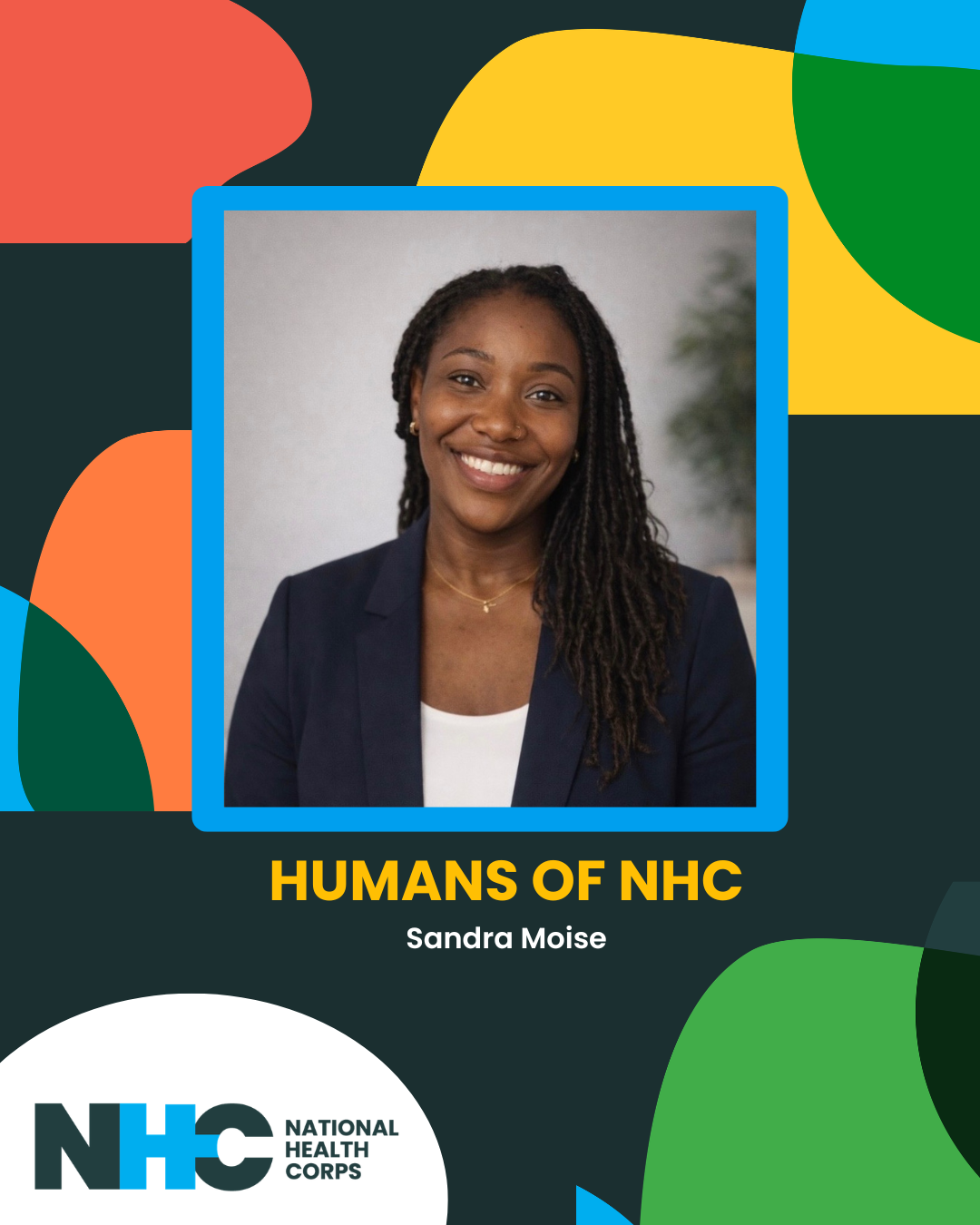
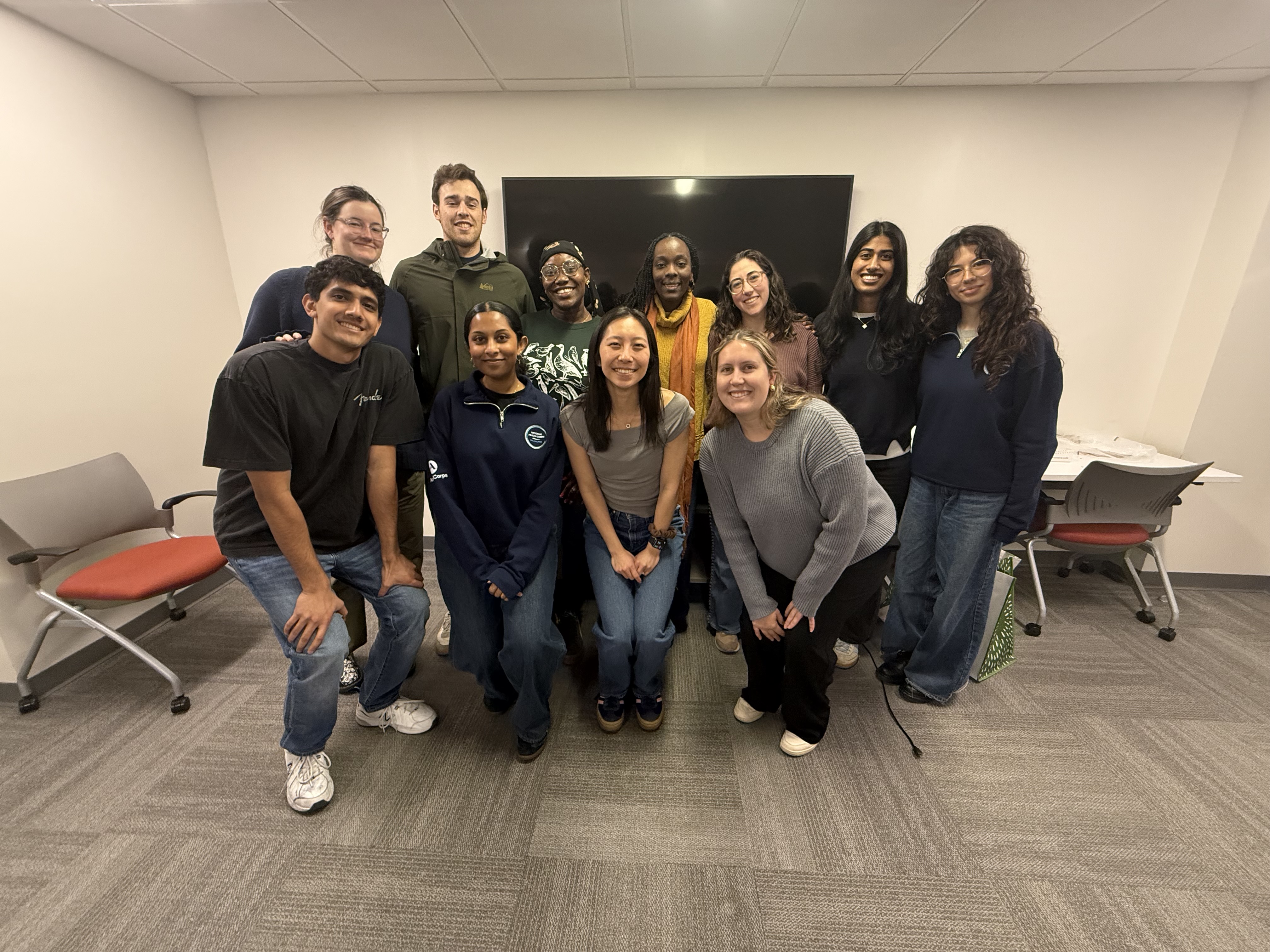
Sandra Moise served as an NHC member in the 2011-2012 cohort. Recently, she joined our cohort at a monthly training day to talk about how her term of service impacted her career. She later sat down with current, Kaylee, to discuss more in depth.
1. What was your AmeriCorps position?
While serving with the National Health Corps in Philadelphia, I worked with HIAS Pennsylvania as a Refugee Child Health Coordinator, supporting clients through programs connected to NSC and LCFS. In this role, I helped newly arrived refugees navigate the healthcare system by coordinating medical appointments and making sure they were connected to the care they needed.
A big part of my role was also education and hands-on support. I conducted health orientation trainings, but I also provided real-life training—meaning I didn’t just schedule appointments, I actually took clients to them and walked them through the entire process. For example, many of our clients received care at CHOP or other primary care offices, so I would not only bring them there for their initial visits, but also teach them how to get there on their own or at least make accommodations for them to get that education.
Everything we did was intentional in preparing them for independence. Since they wouldn’t stay on our caseload forever, the goal was always to make sure they understood how to navigate the healthcare system—and life in general—in the U.S. on their own.
2. How did your AmeriCorps experience lead you to where you are now?
My AmeriCorps experience really laid a solid foundation for my entire career in human services. By the time I started with the National Health Corps full-time, I already knew my passion was helping others—especially within the healthcare system, even though I wasn’t pursuing a path as a doctor or nurse.
Before AmeriCorps, I had moved from Brooklyn, New York to Philadelphia with a degree in Health Science and Nutrition. But with that degree, there wasn’t a clear licensure or certification attached to it, which made it really difficult to find work—especially in a new city where I didn’t have connections or resources. AmeriCorps filled that gap for me. It gave me the hands-on experience, structure, and exposure I needed to actually enter the field.
After completing my service as a Refugee Child Health Coordinator, I was able to stay with HIAS and transition into a full-time role. That became my first real full-time job—with benefits, stability, and a clear path forward. I remember being really excited when I got that position because it felt like everything I had hoped for when I joined Americorps had actually worked out.
Even beyond that, the connections I built during that time continued to open doors. While working at HIAS, I connected with someone who introduced me to opportunities within Children and Youth Services through DHS, which led to my next role. So even that next step in my career can be traced back to AmeriCorps. Everything really stemmed from that experience—every opportunity built on the one before it.
Even now, years later, I still recognize how important that experience was. I truly don’t think I would have been able to get my foot in the door without it. AmeriCorps gave me the experience, confidence, and connections that led me to where I am today.
3. What initially interested you about your current career path/profession?
By the time I was getting ready to graduate college, I realized I was drawn to helping people in a very hands-on way. I actually started off wanting to become a physical therapist, and while I was a sophomore in college, I worked as a physical therapy aide in a clinic in Grand Central, Manhattan. That experience was one of the best I’ve had. Even though I wasn’t in a licensed role, I was still interacting with clients—helping them with exercises, talking to them, supporting them—and I saw the difference even small interactions could make.
At the same time, I realized I didn’t want to be tied down to just one specific path like physical therapy. I didn’t fully know what I wanted, but I knew I wanted to help people in a broader way. That’s what led me to pursue a Health Science degree and eventually explore public health and global health.
But honestly, even before all of that, helping people was already part of my life. As a child of immigrants, I was navigating systems for my parents at a very young age—calling about health insurance, trying to understand paperwork, even using a dictionary to figure things out. I didn’t always know what I was doing, and I definitely made mistakes, but I was the one who had to step in and help.
Looking back, I think that’s really where it started. Helping people with basic but important things—meeting them where they are and making life just a little easier—that’s what naturally became my path. Even though my career has evolved, that core has stayed the same.
4. What/who inspires you? Why?
What inspires me the most is seeing how even the smallest support can make a big difference in someone’s life. In my current role, I work closely with individuals who don’t ask for much, but the little things we do for them can completely shift their day, their week, or even their overall quality of life.
This is actually a population I never planned on working with, but it ended up being the one I’ve stayed with the longest—almost eight years now. And I think it’s because I’ve seen firsthand how impactful this work is. Whether it’s taking a client out to get something they need, helping them build a routine, or just being intentional about their day, those small actions go a long way.
I’ve seen people in their 60s, 70s, even older still grow, still change, still improve their lives in meaningful ways. That’s something that sticks with me. My clients inspire me because they remind me that progress doesn’t have to be big or dramatic—it just has to be real and consistent.
5. What was the moment that you realized this profession was for you?
I would say it wasn’t one exact moment, but more so a realization that came over time—especially after being in my current field for a few years. This wasn’t a population I originally saw myself working with, and at one point, I even considered leaving because of how challenging the work can be.
But over time, I started to recognize the value in what I was doing—not just for others, but for myself too. I realized that I was able to build a career where I could genuinely help people while also creating stability for myself.
In this field, there’s room to grow. You can stay in a direct role, or you can step into leadership and management, like I did. And I think that’s when it clicked for me—when I realized I didn’t have to choose between helping people and taking care of my own life. I could do both. That’s what made me see this as a profession I could stay in and grow within.
6. What is a specific moment that brought a smile to your face in your current position?
Honestly, my clients bring a smile to my face on a regular, day-to-day basis. It’s rare that I go through an entire shift without something happening that makes me smile. But one moment that really stuck with me was when I was having a rough day and sitting in the car with one of my clients.
I didn’t say anything, but he looked at me and said, “Sandra, what’s wrong? Are you okay? Talk to me.” And I will never forget that moment. It caught me off guard because he noticed something was wrong and genuinely cared. Around that same time, I was also dealing with some skin issues, and he noticed that too. He was like, “What’s going on with your face? You have to take care of that.” And it might sound small, but it meant a lot to me.
What makes moments like that even more meaningful is that, for this population, those kinds of interactions are not always typical. This is a client who has multiple mental health and IDD diagnoses and can sometimes have difficulty connecting with others. In the same hour that he showed that level of care, he could also be struggling behaviorally. So to see that side of him—the awareness, the concern, the humanity—meant everything.
I think that’s the biggest thing for me: I get to see the full humanity of my clients. The world may label them by diagnoses, but I get to see their personalities—their humor, their care, their growth, their effort. I’ve worked with this particular client for about five years, and I’ve been able to see the difference in who he was when I first met him compared to who he is now. Even his family has recognized that growth.
So for me, those “special moments” aren’t always big or dramatic. It’s seeing my clients thrive in their own way. It’s seeing small but meaningful changes—like improvements in routines, more engagement, fewer negative behaviors, or just moments where they feel comfortable and supported. Those are the moments that matter.
Even if I’m not always smiling on the outside, those moments make my heart smile. Knowing that the people I support are living even slightly better lives than before—that’s what stays with me and keeps me going.
About the Author
