
Humans of NHC: Meet Dulce, Nurse Manager at HealthRIGHT 360!
My name is Angel Lava and I am a National Health Corp San Francisco member serving at HealthRight360 as one of the Opioid Use Care Coordinators for the 2025-2026 Service Term. Although I work with multiple departments within the clinic, I can only call one department home, and that’s Mobile & Street Medicine. If you cannot find us inside our colorful van treating patients, you can find us together going to the gym or singing karaoke after service!
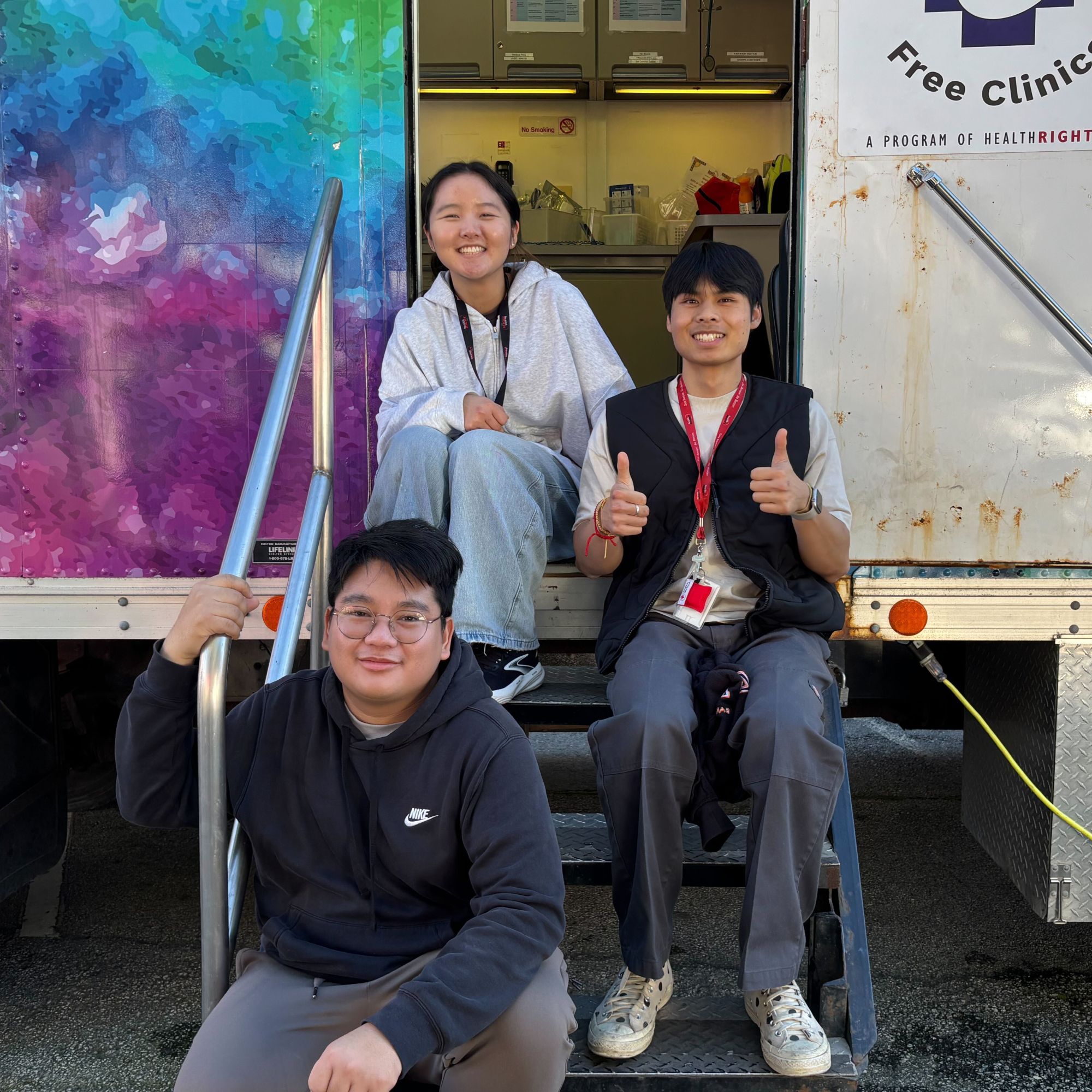
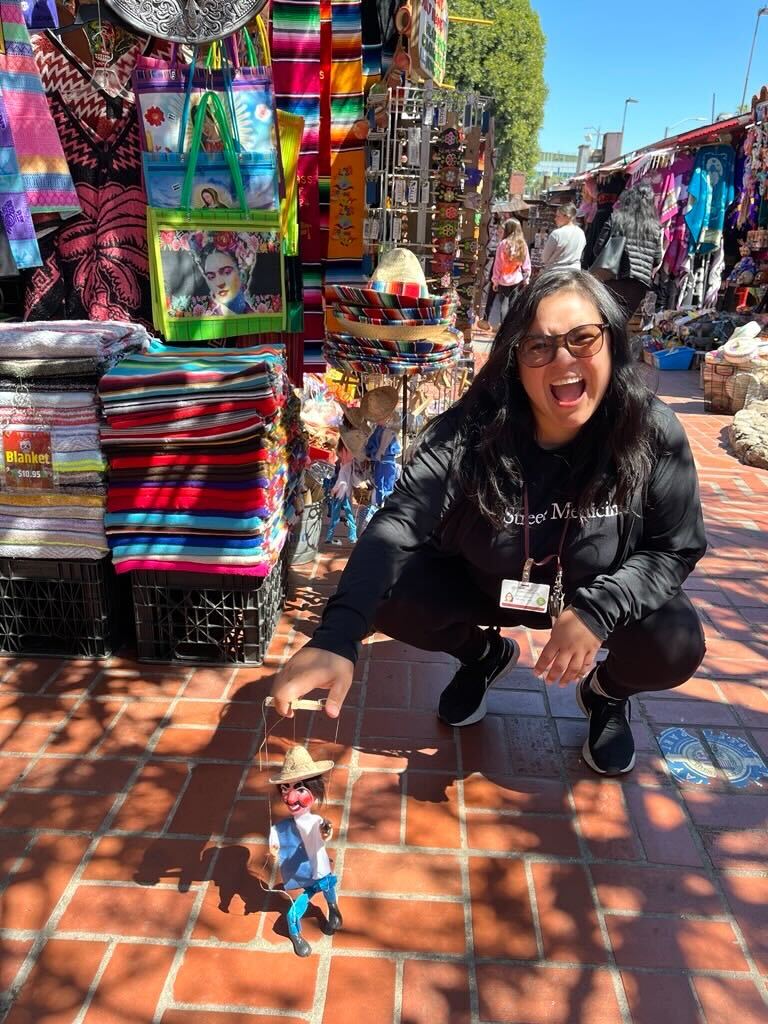
One advantage of being part of Mobile & Street Medicine is working closely with people with a strong commitment to serving the community. One individual that I work closely with that embodies this commitment is Dulce Barajas. As the Nurse Manager in our team, Dulce provides medical services to unhoused patients on the streets, including case management, STI testing, or wound care. She is never afraid of getting her hands dirty if that means reconnecting people to medical access. The only thing that matches her passion for her patients is her unwavering dedication to our team. When she’s not checking in with or feeding the NHC members, Dulce teaches us how to build trust and interact with patients, and allows us to observe as she provides essential care. Dulce inspires me to live a life of serving others and I know she will inspire you as well.
Read on to learn more about Dulce and her important work at HealthRIGHT 360!
Q: How would you define Street Medicine? Are there aspects about Street Medicine that makes it unique compared to other fields of medicine?
Street medicine is a way to provide medical services to unhoused patients when it's impossible, or close to impossible, for them to make it to a brick and mortar clinic. Our goal is to bring everything that a clinic can offer where you have a lot of resources and case management to them. We are able to provide doctor visits or provider visits as a part of our team, or provide simple nursing visits that people might need for wound care and with providing this, it decreases the amount of times that people have to go to the ER because they wait too long for something to get worse. That's what makes us a street medicine team.
Q: Okay, so are there aspects about street medicine that make it unique compared to other fields of medicine?
Yes. Because unlike a clinic, we are adjusting our day to the availability of our patients. If the patient says, “Can you please come back in an hour?”, we will change our schedule around to be able to see this person and move on to whoever can get seen at that time. Another thing would be, we are very patient oriented, meaning we will provide care whichever way our patient needs it, not how the doctor or provider says that they need to do it.
Q: What was your journey into street medicine like? Were there any experiences in your life that made you resonate with Street medicine?
Well, I started off as a nurse in a community health clinic, which, you know, provides a lot of care for the underprivileged, the uninsured, a lot of people with chronic health problems, poverty and I was in charge of providing case management to people with HIV. I would get a list of people who were assigned to the clinic that would visit the ER every month. So it was like, this really, really long list of people who were like, I don't know it could be up to, like, 50 to 80 maybe. And we realized that a lot of those people were homeless, so there was no way for me to contact them. And although we knew that they kept going to the same ER, there was no way for us to follow up with them, and one of our jobs was to follow up with every single person that was going to the ER, so out of that, let's say, 50 monthly lists that I got, I would be able to get a hold of maybe 15 people. So I knew that getting in contact with people was a barrier, and these people just kept going back to the ER, month to month to month. I spoke to a friend about how frustrating it was. So then that's when my friend told me there was something called “street medicine”, and they go out and look for people who need medical services and connect them. So that's when I decided to go into this field. Everything that I was already doing inside the clinic I got to do outside, and that's something that I've always kind of wanted to do, because it is very difficult for people to sometimes make it to their appointments. Coming into street medicine, I was able to bring everything that I had learned from inside the clinic and provide those services to the people outside.
Q: What are some unique challenges specific to Street Medicine? And what are some unique advantages? For example, serving with Mobile Street Medicine I realized that you can practice medicine outdoors.
Well, a challenge is communicating with the patient, whether it be them changing location and not coming back to their spot that they normally sleep in. Finding them sometimes is a challenge when they're “travelers”, which is what I call them, meaning they don't like to sleep in one spot because they don't want to be recognized, because if they get recognized, they’re in more danger of getting targeted. So they'll sleep in different areas or wherever, you know, and then also getting a hold of patients, because not a lot of them have cell phones. I ask patients when I meet them, “If you're not here, where do you go? Hang out? Do you go to the park? Do you go to this liquor store? Do you know this person here? What's your nickname? How can I find you?” Sometimes people will say, “Well I usually hang out at this liquor store and hang out with my friends outside. You know, from this time to that time you know.” So then if I can't find them at that encounter, I'll drive to that liquor store, or I'll drive to that park. And again, that's if they give me enough information.
Sometimes they won't give me enough information the first time I meet them, but eventually they do if they feel comfortable enough, so that's when I'll be able to find them. I think an advantage is that, because we take the time to build relationships with patients and we come back when we say we are going to come back, because we build that relationship and trust, patients are more open to suggestions, whether that be like starting a new medication or trusting us with helping them getting an ID. It’s stuff that at a clinic, if you come into an appointment, you wouldn't be able to do that. If a patient needs an ID, if they need a med refill, if they have pain, if they have a wound, we can take care of that, and we could take an hour if we need to, sometimes, depending on the severity of their needs. But at the clinic, they have literally 15 to 20 minutes per appointment, and you're only coming here for a cough, not for a pain, not for a wound, not for anything else. We are flexible with our time. We can help them with many things in one visit, and it doesn't have to be regulated by time.
Q: What advice can you give to someone aspiring to get into this field? What qualities do you think give people an edge in succeeding in this field?
Coming into this field, you have to be flexible, right? Flexible with time, flexible with your day, flexible with things that pop up all of a sudden. So if you were the kind of person that needs standards and needs to follow precise steps, this could be a very difficult area. Or career path to do, because things are changing day to day. It could change hour to hour. So if you're okay with that, and you’re a person that is good at learning to adjust. If you’re a person that knows how to adjust and not panic, then it would be great.
We do also involve ourselves a lot in our patients’ lives, so we need to learn how to manage our emotions, find an outlet, you know. People that come into this field also have to realize that you're going to be outside, and outside means different weather. So sometimes if it’s very hot and there’s no shade we're going to be in the hot sun with our patients. And sometimes there’s urine, feces, and smells we’re going to go experience to visit with the patient.
Q: In your personal opinion, what do you think is the future of Street Medicine?. Do you think in the future most hospitals will expand to add a street medicine department or give more funding? . And do you think there will be different challenges in the future?
I don't know. It's kind of hard to say. Like coming from a bigger organization down in Southern California, I did see a lot of teams grow. We taught maybe three different groups or more. There is quite a lot of street medicine or outreach teams, not a lot that are providing full-time street medicine, because a lot of clinics, I've noticed, have a team that goes out once a week, or has a mobile van like twice a week in the same spot, you know? So, I mean, it's definitely growing.
People think that street medicine encourages homelessness because we're going out there to them and not helping them into a home. Our goal for street medicine is to better un-housed patients’ health enough for them and not helping them into a home. Our goal for street medicine is to better un-housed patient’s health enough for them to have the energy, the courage, or a better understanding of their situation, because a lot of them have a lot of mental or chronic health issues. So they do drugs because they are outside and they have to stay awake all night or else they're going to get beat up. Or women, I know, I've known a lot of women too, that have started doing meth when they started living outside because they feared to be raped. So they would stay up, but to stay up, they just had to, like, keep doing it and doing it. Their priorities are staying alive, finding food, finding a place to sleep safely.
So if we start with their health, and eventually start feeling better. Then they say, “Okay, well, maybe I can lower my drug content just a little bit, you know, because I'm starting to feel better.” And that's a win already, because they're thinking about it, right? I've seen people who were very sick, did a lot of drugs, slept in a mattress under a freeway, and now, their health is a little better, they consume less drugs, and they make their own appointments. Now, they have their own ID, they signed up for SSI by themselves. So that means they were able to function better because they weren’t outside anymore. In our point of view, bettering their life starts with their health, but people that see us from the outside and don't quite understand how we're helping. They don’t see that side which brings other opinions about not wanting more street medicine teams to grow.
“Humans of NHC” is a campaign run by the National Health Corps Program that highlights people that interact with the NHC program in any capacity.
Members, Staff, Mentors, Supervisors, Clinic Staff are interviewed by an NHC Member and are asked to share about their career trajectory, their passions, challenges and advice for professionals exploring their fields. These interviews are then transcribed and posted on the National Health Corps website for all to read!
About the Author
