
Different Ages, Same Heart
My name is Sabrina, and I am serving as the Senior Vitality Assistant at Curry Senior Center for the 2025-2026 term. My role focuses on promoting older adults’ ability to live independently, manage their health, and reduce social isolation through the facilitation of technology and health education programs.
Serving a second service term has felt less like starting over and more like coming full circle. My transition from being a Mentoring for Success (MFS) Program Coordinator with San Francisco Unified School District (SFUSD)’s AmeriCorps Program to a Senior Vitality Assistant at Curry Senior Center with National Health Corps has been meaningful and humbling, reminding me why I was drawn to service work in the first place.
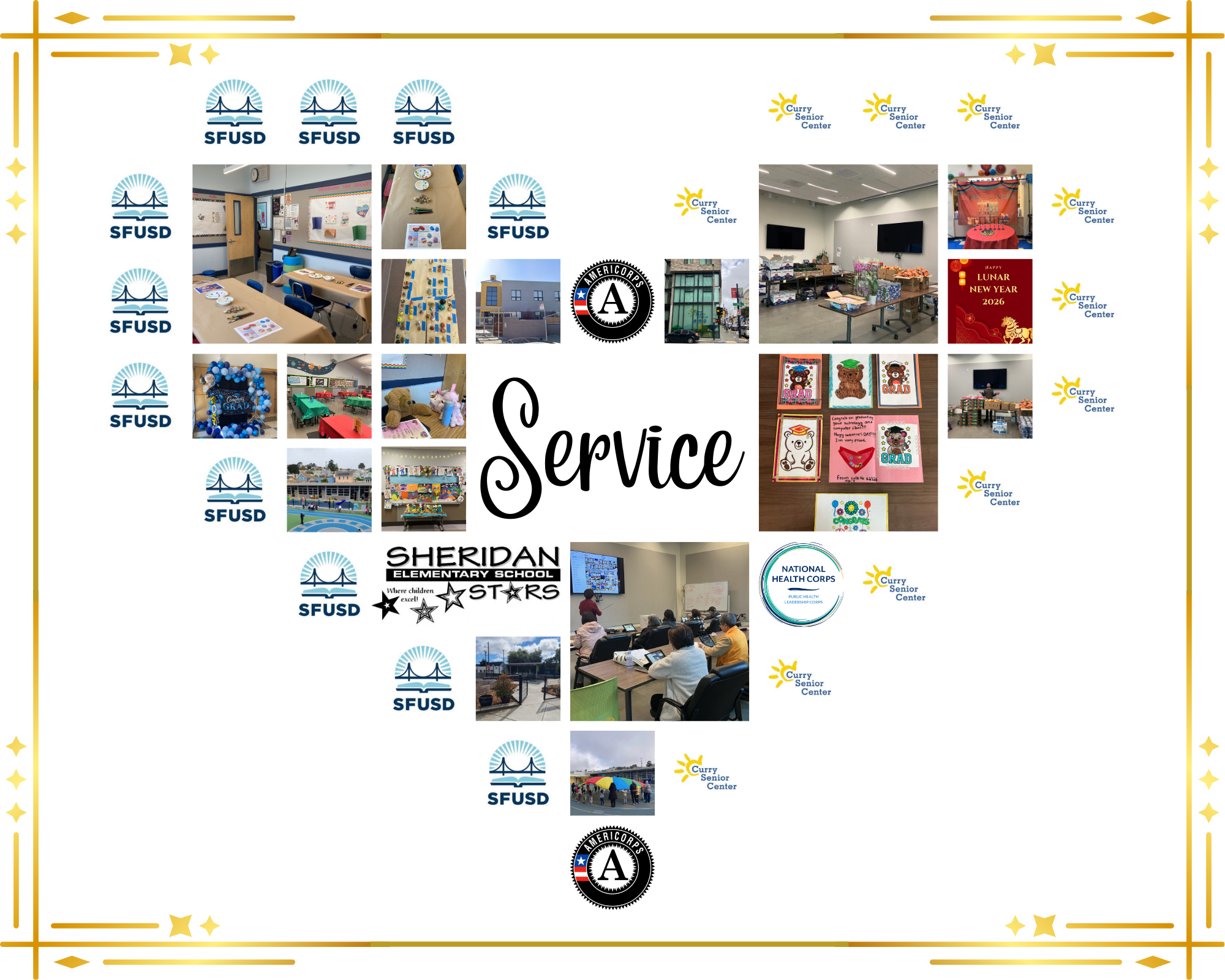
At SFUSD, my days revolved around students navigating behavioral challenges often stemming from unmet needs, instability, or trauma. Through the MFS program, I worked closely with students who struggled to feel regulated, understood, or safe in a school setting, and matched them with mentors who could support their socio-emotional well-being. My role was not just about managing behavior, it was about supporting behavioral health and wellness through trust, patience, and connection. I watched students become more academically-driven, take initiative during monthly program activities, and slowly open up during one-on-one mentoring moments with their mentor. Small breakthroughs, such as a student choosing to stay in class, expressing their emotions with words, or showing care for a peer, felt rewarding. Helping foster a positive school climate taught me that healing often begins when someone feels seen.
Leaving that work was not easy. I carried those students with me into my second service term, unsure how my experience would translate into a space centered on seniors and adults with disabilities. What I did not expect was how familiar the work would feel at its core. While children and seniors exist at opposite ends of the age spectrum, they share the same heart and a very similar mindset. Both groups want to feel heard, respected, capable, and valued. At Curry Senior Center, the challenges look different, but the human needs are the same: connection, dignity, patience, and support.
In my role, I also support health education programs such as grocery distribution and Food Pharmacy Maintenance. These initiatives go beyond food access because they provide stability, health knowledge, and patient care for individuals managing chronic conditions or limited resources. I have seen how empowering it can be for seniors to take control of their health in ways that are practical and mindful of their lived experiences, similar to how students thrive when they are given agency and encouragement. In both settings, empowerment builds confidence and restores a sense of autonomy.
One of the most meaningful aspects of my work at Curry has been addressing and reducing social isolation among older adults. Through technology training programs and digital literacy workshops, I watched seniors gain confidence using devices, reconnect with loved ones, and rediscover joy through sharing technical knowledge. The loneliness many older adults face mirrors the isolation I once saw in students who felt misunderstood. This observation has reaffirmed my belief that community is a form of care.
My second service term has shown me that while life stages may differ, the emotional landscape does not. Whether working with children or seniors, the work is about holding space, building trust, and reminding people that they matter, because regardless of age, we all need to feel seen. That lesson is one I will carry with me long after my service ends.
About the Author

Host Site
520 Turk Street, San Francisco, CA 94102
520 Turk Street, San Francisco, CA 94102